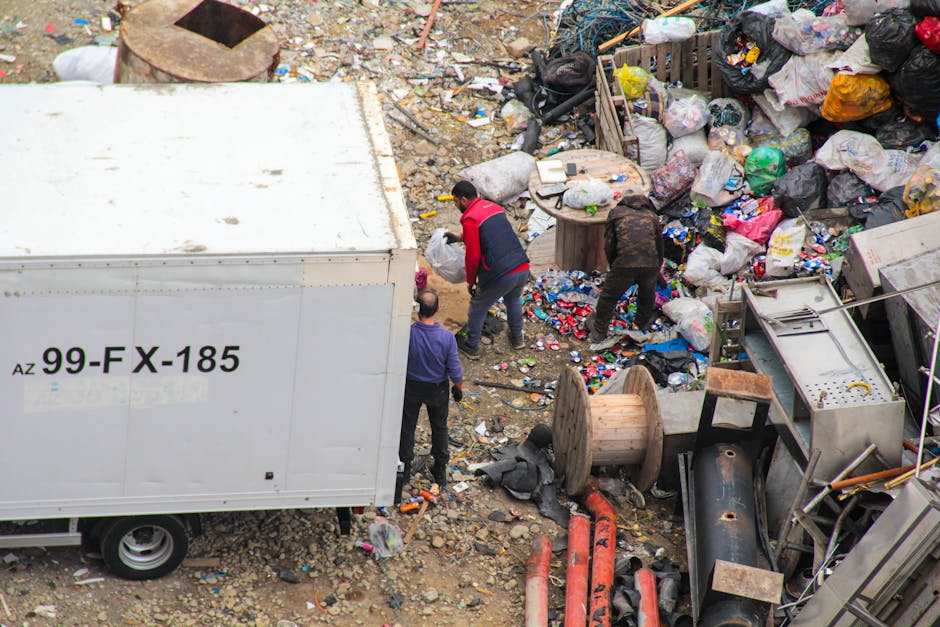
Rubbish removal access issues on Brockley high streets solved
If you have ever tried to clear rubbish from a busy high street in Brockley, you will know the problem is rarely the rubbish itself. It is the access. Narrow pavements, parked cars, short loading windows, awkward frontages, and the simple fact that people still need to walk past while you work - that is where jobs slow down. The good news is that Rubbish removal access issues on Brockley high streets solved is not just a nice headline. With the right planning, the right vehicle, and a calm, step-by-step approach, those headaches can be handled properly.
This guide breaks down how access problems are usually solved on Brockley high streets, what to expect, where delays tend to happen, and how to avoid the usual mistakes. It is written for shop owners, landlords, residents, contractors, and anyone trying to move waste without turning the street into a small disaster. Let's face it, nobody wants that awkward moment where a van blocks the whole pavement at 8:30 on a Tuesday.
Why Rubbish removal access issues on Brockley high streets solved Matters
High street rubbish removal is different from a straightforward domestic clearance. On Brockley roads, space can be tight enough that one badly parked van or one oversized pile of bags creates a chain reaction. Pedestrians squeeze through, shop deliveries get delayed, and the job starts to eat into the day. If the access plan is weak, the waste team spends more time waiting than clearing.
That matters for three simple reasons. First, it affects safety. Second, it affects cost, because delays and extra handling usually mean more labour time. Third, it affects how the street feels for everyone else. A neat, efficient collection is barely noticed. A clumsy one is noticed by everyone. You can almost hear it: the squeak of a trolley wheel, someone asking if they can get past, a driver revving a bit too close. Small things, but they add up.
There is also a reputational side. For a business, a landlord, or a contractor, messy access management can make a simple clearance look disorganised. On a high street, appearance matters. People judge quickly.
Expert summary: the real fix is usually not "more muscle". It is better planning, smaller handling steps, smarter timing, and clear communication before the team arrives.
If your rubbish is not building up in one easy-to-reach driveway, the answer is rarely to hope for the best. It is usually to plan the collection around the street, not the other way around. For larger jobs, it can also help to compare services such as rubbish removal, rubbish collection, and broader waste removal options before the booking is made.
How Rubbish removal access issues on Brockley high streets solved Works
In practice, solving access issues is a mix of planning and adaptation. The first job is to understand what kind of access challenge you actually have. That sounds obvious, but people often miss it. A narrow doorway is not the same as a tight loading bay. A blocked pavement is not the same as an awkward internal staircase. Each one changes the method.
The process usually starts with a short review of the site: where the waste is located, how far it needs to be carried, what vehicle can legally and safely stop nearby, and whether anything can be moved inside first to create space. In many Brockley high street jobs, the answer is to break the clearance into smaller stages rather than trying to shift everything in one go.
That may involve:
- Using a smaller van or a vehicle that can stop closer to the property.
- Scheduling the collection outside peak footfall or delivery times.
- Pre-sorting waste so the heaviest or bulkiest items are handled first.
- Using extra labour for a quick carry-out if kerb access is limited.
- Removing obstacles before the crew arrives, where possible.
Sometimes a job that looks impossible at street level becomes simple once the load is staged properly. A quick example: a shop refit on a compact parade may only need a short morning window, two crew members, and a compact carry plan. The same job attempted at lunch time, with a larger vehicle and no pre-clearance, becomes a slow grind. Same waste. Very different outcome.
Where a property has mixed access issues, it is often worth separating the problem into categories. Builders waste, old fixtures, and bulky furniture each behave differently. A clearance involving builders waste or specialist furniture disposal may need more handling room than standard bagged rubbish.
Key Benefits and Practical Advantages
When access problems are handled well, the benefits are immediate. The job moves faster, the street stays calmer, and you reduce the chance of last-minute stress. Honestly, that alone is worth a lot on a busy road.
- Less disruption: pedestrians and neighbouring businesses can keep moving.
- Safer handling: fewer rushed lifts and fewer awkward carries.
- More predictable timings: the crew can work to a realistic plan instead of improvising.
- Better value: fewer delays usually mean fewer wasted labour minutes.
- Cleaner presentation: useful for businesses that care how the frontage looks.
There is a commercial benefit too. If you are clearing a shop, office, flat, or mixed-use unit on Brockley high street, access-aware rubbish removal is often the difference between a tidy handover and an all-day disruption. For offices and workspaces, that can be especially important. A well-planned office clearance keeps furniture and waste moving without blocking the building entrance for half the morning.
And for residents above or behind the parade, a smooth clearance means fewer awkward encounters with neighbours. No one enjoys stepping over bags in the drizzle while asking whether the team is "almost done".
Who This Is For and When It Makes Sense
This approach is useful for anyone dealing with constrained access, but it is especially relevant in a high street setting. Brockley has that familiar London mix: frontages close to the pavement, limited stopping space, and properties that often share access with other homes or businesses.
You are likely to need a more access-aware rubbish removal plan if you are:
- A shopkeeper clearing stock, packaging, or unwanted fixtures.
- A landlord preparing a unit for new tenants.
- A homeowner or tenant dealing with bulky household waste.
- A contractor removing trade waste after a small refit.
- A business that cannot afford to block customer access.
It also makes sense when the job includes heavy, awkward, or hard-to-carry items. Sofas are a classic example. They are deceptively awkward, and a narrow doorway or sharp turn can turn a simple lift into a proper faff. In those cases, a dedicated sofa removal service may be the most practical route.
For smaller domestic jobs, a standard rubbish clearance can be perfectly adequate if the team has a realistic plan for parking and carrying. The key is matching the method to the site, not assuming one size fits all.
Step-by-Step Guidance
If you want the short version, here it is: assess the access, reduce the volume, choose the right timing, and keep the route clear. The longer version is below.
- Map the access before booking.
Look at where the waste sits, where the vehicle could stop, and how far items would need to be carried. If you are unsure, walk the route yourself. It takes two minutes and saves headaches later. - Separate bulky items from loose waste.
Loose bags, cardboard, broken furniture, garden waste, and builders debris each need different handling. Grouping them sensibly makes loading quicker. - Choose a sensible collection window.
High street traffic patterns matter. Early morning or quieter periods can be much easier than mid-day. A little timing can make a big difference. - Make sure the team can get in and out safely.
That means doors unlocked, obstacles shifted, and a clear path to the waste. If access includes stairs, courtyards, or rear lanes, say so in advance. - Plan for the heaviest items first.
Large pieces should usually be tackled before the smaller bits. Once the space opens up, everything else tends to go more smoothly. - Use the right service level.
Domestic, commercial, and trade waste jobs are not identical. A mixed load may need a broader waste solution such as waste collection or waste clearance, depending on the mix. - Leave a buffer.
It is better to overestimate the access challenge slightly than to run the whole operation on guesswork. Truth be told, guesswork is how people end up standing around with a mattress and nowhere to put it.
A lot of people skip step one. They book first and think later. That's usually where the trouble starts.
Expert Tips for Better Results
From a practical point of view, the best access solutions are rarely flashy. They are tidy, disciplined, and a bit boring - which is exactly what you want.
Tip 1: reduce the carry distance. Even a few extra metres matter when you are shifting heavy waste up steps or around parked cars. If you can stage items near the entrance the night before, do it.
Tip 2: keep the load mixed only when it helps. Mixed waste is fine if it loads efficiently, but sometimes separating items by weight or shape saves more time than you expect.
Tip 3: do not underestimate street timing. The quieter the road, the less pressure the crew feels. A calmer street usually means a cleaner job. That is especially true near parade-style high streets where one delayed van can affect half the row.
Tip 4: communicate one thing clearly. If there is only one message you give the crew, make it the awkward bit: "the back gate sticks", "parking is tight", or "the bins are behind the loading door". That little detail changes everything.
Tip 5: use a service that can adapt. A flexible clearance team is worth far more than a rigid one with a bigger truck. The truck is only part of it. The people, the route, and the sequence matter more.
For ongoing business or repeat-site work, it may also be useful to review business waste options so that waste does not build up between collections. Small regular pickups can prevent a large access problem from developing in the first place.
Common Mistakes to Avoid
Most access problems are preventable. The frustrating part is that they are usually prevented by simple things.
- Assuming a van can stop anywhere: not every street layout allows that, even for a short time.
- Ignoring delivery traffic: if the street is busy with deliveries, your clearance may need a different slot.
- Underestimating bulky items: one sofa or cabinet can change the whole loading plan.
- Not checking rear access: lots of Brockley properties have a second route that could save time, if you remember to use it.
- Leaving waste unsorted: it makes loading slower and can create confusion on site.
- Leaving the booking too late: by then you are stuck with whatever time slot is left, not the one that works.
A very common one is forgetting to mention a narrow stairwell or shared entrance. It sounds minor when you are on the phone. Then the crew arrives and realises the lift is nowhere near the waste. Not ideal. Not ideal at all.
If the waste is tied to a property move, a flat move-out, or a partial emptying of a room, a dedicated flat clearance or home clearance can be easier than trying to force everything through a generic rubbish booking.
Tools, Resources and Recommendations
You do not need fancy equipment to solve access issues, but a few practical tools and habits help a lot.
- A simple access checklist: gate widths, stair count, parking notes, and any locked areas.
- Basic waste segregation: separate heavy rubble, furniture, green waste, and general rubbish where possible.
- Good lighting for early or late jobs: dark doorways and tight alley access are where mistakes happen.
- Protective gloves and correct lifting technique: boring but essential.
- Photos of awkward points: a quick picture of the loading route can explain more than a five-minute description.
For households, a broader house clearance may be worth considering if the access issues are part of a larger emptying job rather than a one-off bin run. For garages and storage spaces, garage clearance is often the better fit because those spaces tend to hide heavier, dustier, and more awkward items than people remember at first glance.
One practical recommendation: keep a short note on your phone with the access details. Sounds tiny, but it helps if you are arranging repeat collections or speaking to a manager later in the week.
Law, Compliance, Standards, or Best Practice
For rubbish removal in the UK, the main point is simple: waste should be handled safely, responsibly, and in line with the relevant duty of care. You do not need a legal lecture to understand the basics. You do need to avoid careless handling, fly-tipping risks, and unsafe loading on the public highway.
Best practice usually includes:
- Making sure waste is collected by a legitimate provider.
- Keeping the site safe for workers and the public.
- Avoiding obstruction of pavements, entrances, or emergency access.
- Separating certain waste streams where practical.
- Using sensible lifting and loading methods to reduce injury risk.
For business sites, it is sensible to keep records of what was removed and when, especially if waste management is part of a tenancy, refit, or premises handover. If builders debris is involved, builders waste should be handled carefully and not left in a way that blocks public movement. For heavier or recurring waste, waste disposal should always be discussed in practical terms before the job begins.
It is also good practice to be honest about access limitations before the crew arrives. That is not just polite - it helps the provider choose the safest and most efficient way to complete the job.
Options, Methods, or Comparison Table
Different access problems call for different methods. Here is a simple comparison to help you decide what fits best.
| Method | Best for | Strengths | Limitations |
|---|---|---|---|
| Small hand-loaded clearance | Tight high street access, short carry distance | Flexible, low disruption, easy to position | Slower for larger volumes |
| Standard rubbish removal | General household or mixed waste | Versatile, straightforward booking | May need better parking access |
| Bulky-item removal | Sofas, wardrobes, appliances | Handles awkward items efficiently | Needs clear measurements and route planning |
| Trade or business collection | Shops, offices, refits, repeat waste | Can support ongoing site needs | Requires good timing and coordination |
If the main issue is simply a tight road, a small-handled collection may be enough. If the site also has shared access, internal stairs, or multiple waste types, the better answer is usually a more tailored service rather than a bigger vehicle. Bigger is not always better. On Brockley high streets, often it is just clumsier.
Case Study or Real-World Example
Picture a small mixed-use unit on a Brockley high street. The front is a narrow retail space, the rear has a shared access route, and the waste includes old shelving, broken packaging, and a couple of bulky items. The owner initially assumes the collection will need a large van parked outside for a long time.
In reality, the best solution is more modest. The team arrives early, uses the rear route for the lighter bags, stages the heavier items near the entrance, and completes the load in a short window before the street gets busy. No drama. No blocked pavement. The shop opens on time.
That kind of result is common when the access is thought through in advance. The difference is rarely luck. It is just clearer planning and a willingness to adapt on site.
We have seen the same pattern with house clearances too. A property that looks difficult from the outside can be much easier if you know which entrance to use and what order to remove things in. A carefully handled house clearance often feels almost calm by the end, which is not a word people normally use about rubbish removal, but there you go.
Practical Checklist
Use this before the team arrives. It saves time, and a little stress too.
- Have I checked where the vehicle can legally and safely stop?
- Have I identified any narrow gates, staircases, or rear access routes?
- Is the waste grouped into sensible piles or categories?
- Are there bulky items that need extra carrying room?
- Have I mentioned any parking restrictions or busy street times?
- Is the route from the waste to the exit clear?
- Do I need a more specific service such as furniture disposal or office clearance?
- Have I left enough time for loading and a bit of unexpected awkwardness?
Quick reminder: if you can make the waste easier to reach, you can often make the whole job cheaper, safer, and quicker. Simple as that.
Get a free quote today and see how much you can save.
Conclusion
Solving rubbish removal access issues on Brockley high streets is really about respecting the street as much as the waste. Tight pavements, shopfronts, parked vehicles, and busy footfall all change the way a clearance should be done. Once you plan around those realities, the whole process becomes much smoother.
The best results come from clear communication, realistic timing, and a method that fits the location. Not every job needs a big operation. Some need a small van, a short carry, and a team that knows how to work without making a fuss. That is often the real win.
If you are facing an awkward clearance, take the access seriously from the start and the rest tends to fall into place. A neat job has a quiet sort of satisfaction to it. And on a busy Brockley morning, quiet is underrated.
Frequently Asked Questions
What causes rubbish removal access problems on Brockley high streets?
Usually it is a mix of narrow pavements, limited parking, busy foot traffic, and awkward building layouts. On a high street, even a short stop can be difficult if the route has too many pinch points.
How do you solve access issues for rubbish removal quickly?
The quickest fix is usually to reduce the carry distance, choose a quieter time slot, and separate bulky items from loose waste. A small amount of planning before the collection makes a big difference.
Do I need a special service for bulky items?
If the load includes sofas, wardrobes, or other awkward pieces, yes, it often helps to use a more suitable service. Bulky items are harder to manoeuvre and can slow the whole job down if they are not planned for properly.
Is rubbish removal on a high street more expensive?
It can be, depending on access and labour time. Tight access, long carry distances, and complex loading all add time, so a clear site plan usually helps keep costs sensible.
Can collections happen early in the morning?
Often they can, and early slots can be ideal on busy roads. The best time depends on the street, traffic patterns, and any local restrictions or building access arrangements.
What should I tell the clearance team before they arrive?
Tell them about parking, gate widths, stairs, shared entrances, rear access, and any bulky items. The more accurate the access notes, the easier it is for the team to arrive prepared.
What if the waste is inside a flat above a shop?
That is common enough, and it usually needs a more careful approach. A flat clearance can be the better option when stair access, shared entrances, or upper-floor loading are involved.
Can business waste be collected from Brockley high street premises?
Yes, and it is often more efficient when arranged as a regular or planned collection. Businesses benefit from keeping waste under control before it starts affecting the frontage or customer access.
What happens if parking is impossible right outside?
Then the job may need a smaller vehicle, a different loading point, or extra carry time. The goal is to adapt the method rather than forcing the same setup onto every street.
How can I make the collection faster on the day?
Pre-sort the waste, clear the route, and have the access points ready. If the crew can get straight to work, the job is usually done much faster and with less disruption.
Do I need to sort waste before collection?
Not always, but it helps. Sorting bulky items, general rubbish, and trade waste into sensible groups makes loading smoother and can prevent confusion on site.
Where do home and house clearances fit in?
If the waste is part of a larger property clean-out, a home clearance or house clearance is often more practical than a basic rubbish pickup. It depends on how much there is and how hard it is to reach.
What is the safest way to handle access on a busy street?
Keep the public route clear, avoid rushed lifting, and make sure the team has enough room to move safely. Safety always comes before speed, even on a busy day.
How do I choose between waste collection and waste disposal?
If you mainly need items removed from site, collection is the practical first step. If you want a broader solution for what happens to the waste after removal, a wider waste disposal approach may be more appropriate.
Can you really solve access issues without causing disruption?
Most of the time, yes. With the right timing, clear communication, and a collection method that fits the street, the job can be completed with very little fuss. And honestly, that is the whole point.