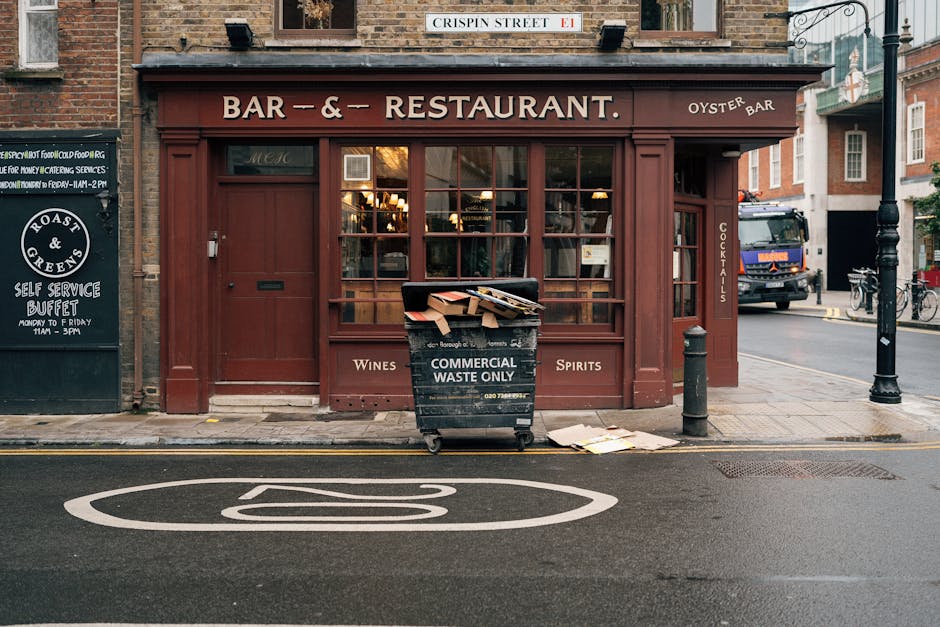
Rubbish collection for shops on Lordship Lane SE22

If you run a shop on Lordship Lane, you already know waste can get messy fast. A few busy trading days, a stock delivery, a burst cardboard box mountain, and suddenly the back area looks like it has had a bad week. Rubbish collection for shops on Lordship Lane SE22 is not just about keeping things tidy; it is about protecting presentation, avoiding nuisance, and making sure waste leaves the premises in a way that suits both your business and the street around it.
That matters here more than people sometimes realise. Lordship Lane is a busy local high street with foot traffic, deliveries, varied shop sizes, and limited tolerance for clutter. Whether you run a cafe, salon, convenience store, boutique, or takeaway, the right rubbish collection routine can save time, reduce stress, and stop small issues becoming daily frustrations. This guide walks through how it works, who needs it, the choices worth making, and the practical details most shop owners end up asking about anyway.
Why Rubbish collection for shops on Lordship Lane SE22 Matters
For shop owners, rubbish is not a back-office issue. It is part of the customer experience, staff workflow, and day-to-day reputation of the business. Bags left out too early, cardboard stacked in the wrong place, or mixed waste spilling into the alley can make a shop look disorganised even if everything inside is running well. Let's face it, customers notice these things. They might not say anything, but they notice.
On a local street like Lordship Lane, the impact is even stronger. Space is valuable, deliveries need room, and the pavement outside your premises is shared by everyone. A sensible collection arrangement helps you stay clear, clean, and predictable. That tends to make life easier for neighbours, staff, and anyone handling the rubbish on a cold, wet Tuesday morning when the bins are already full and everyone is in a hurry.
There is also a practical business angle. Good waste handling reduces pest risk, keeps entrances safer, and helps maintain a professional appearance. If you trade in food, beauty, fashion, or anything with packaging-heavy stock, you will also know that waste accumulates quicker than expected. The right collection process turns this from a recurring headache into a managed task.
Expert summary: the best rubbish collection setup is not the one that sounds impressive; it is the one your team can actually use every day without confusion, delay, or overflow.
How Rubbish collection for shops on Lordship Lane SE22 Works
In simple terms, shop rubbish collection usually involves separating your waste streams, storing them correctly, and arranging regular uplift so bins or containers do not build up beyond what your premises can handle. The details vary by business type, waste volume, and available storage space. A small boutique with minimal packaging will need something very different from a deli producing food waste and cardboard every day.
Most shop waste falls into a few familiar categories:
- General waste such as mixed non-recyclable rubbish.
- Cardboard and packaging from deliveries and stock.
- Recyclables where separation is practical and available.
- Food waste for shops that prepare or sell consumables.
- Specialist waste such as aerosols, chemicals, sharps, or damaged stock items that need extra care.
The collection schedule is usually designed around how quickly waste builds up. For some shops, a weekly uplift is enough. Others need several collections a week, especially if cardboard is bulky or food waste is involved. The timing also matters. In a busy retail setting, collections often need to happen before opening, after closing, or during a quieter window so staff are not weaving around bins while customers are at the till. Bit of a nuisance otherwise.
It helps to think of the process in stages: produce waste, sort waste, store waste, present waste for collection, and confirm the uplift has actually solved the problem. That final part gets overlooked a lot. A bin service only works if the storage point is sensible and the collection pattern matches reality on the ground.
Key Benefits and Practical Advantages
Good waste collection is not glamorous. Still, it pays back in ways that are easy to feel day to day. When your shop waste is under control, the whole place tends to run more smoothly.
- Cleaner front and rear areas: less clutter means a better impression for customers and passers-by.
- Safer working environment: fewer trip hazards, less spill risk, and less obstruction around deliveries.
- Better stockroom organisation: cardboard and packaging do not end up competing with inventory space.
- Lower pest attraction: especially useful where food or organic waste is involved.
- Reduced staff stress: no one enjoys wrestling with overfilled sacks before opening.
- More consistent compliance: good habits make legal and operational obligations much easier to manage.
There is also the customer-facing benefit. A tidy frontage on Lordship Lane contributes to the street's overall feel. It tells people the business is looked after. That sense of care matters, even if people never consciously think about it. They just feel it.
And if you are comparing waste services as part of a wider premises refresh, it can be useful to think about how rubbish collection fits alongside other housekeeping tasks. For some businesses, this is part of a broader facilities routine rather than a stand-alone decision. You can even coordinate it with other operational improvements, much like the way some owners review commercial cleaning support when they are tightening up shop standards.
Who This Is For and When It Makes Sense
This kind of service is relevant to any shop that produces regular waste and does not have the time, storage space, or staffing flexibility to deal with it easily in-house. That includes small independent retailers, convenience shops, beauty salons, cafes, bakeries, off-licences, and specialist stores. Even a modest outlet can produce more waste than expected once packaging, promotional material, and daily trading rubbish are counted properly.
It makes particular sense if you recognise any of these situations:
- Bins are filling faster than staff can empty them.
- Cardboard is taking over a stockroom corner.
- There is no convenient space to store waste discreetly.
- Current collection timing clashes with trading hours or deliveries.
- You have had complaints about smell, litter, or mess outside.
- Your waste streams are becoming more varied and harder to manage.
Some shop owners only start thinking seriously about rubbish collection once something goes wrong. A missed uplift, a week of heavy delivery traffic, or a hot spell can quickly make waste management feel urgent. If that sounds familiar, you are not alone. It happens all the time, usually at the worst possible moment, of course.
It also makes sense when you are trying to standardise operations across multiple locations. If you manage more than one site, having a consistent approach to rubbish collection can reduce confusion and make staff training easier. One set of habits, fewer awkward surprises.
Step-by-Step Guidance
If you want rubbish collection to work properly for a shop on Lordship Lane SE22, the safest approach is to treat it as an operating system rather than an afterthought. Here is a practical way to set it up.
- Audit your waste. Spend a few trading days watching what is actually thrown away. Look at volume, type, and timing. You may find cardboard is the biggest issue, not general waste.
- Separate waste streams. Decide what can be recycled, what must be general waste, and whether any waste needs special handling. Clear separation reduces contamination and makes collection cleaner.
- Measure storage space. Check where bins, sacks, and boxes can be kept without blocking access routes or creating a visual mess.
- Match collections to trading patterns. Busy delivery days and weekend trading often change the amount of waste generated. Build around real life, not a perfect spreadsheet fantasy.
- Train staff briefly but clearly. A two-minute explanation can prevent repeated mistakes. Where do boxes go? Which bin gets food waste? Which items must never be mixed in?
- Set a review point. Revisit the system after a few weeks. If one bin is always overfull or another is half empty, adjust the arrangement.
A small but useful habit is to assign one person per shift to do a quick waste check before closing. Nothing dramatic. Just a glance around the back area, the bin store, and the shop floor. It catches problems early, while they are still easy to fix.
If you are also thinking about broader operational support for your premises, it can help to look at services like house keeping services where waste control, presentation, and routine maintenance all support each other. Not every business needs that level of coordination, but for some it is the difference between tidy and constantly chasing tidiness.
Expert Tips for Better Results
In our experience, the best waste setups are usually the boring ones. Predictable. Easy. Hard to mess up. Fancy systems often fail because staff have to think too much while they are busy doing ten other things. Here are a few practical tips that make a real difference.
- Keep cardboard flattened immediately. It sounds obvious, but upright boxes eat space fast and make collection areas look chaotic.
- Use clear labels on bins. If staff have to guess, they will guess differently. That is how contamination happens.
- Protect the collection point from weather. Rain-soaked cardboard and leaking sacks create extra mess and can make collections awkward.
- Think about odour before it becomes a problem. Food waste, warm weather, and delayed uplift are a bad mix.
- Keep access routes simple. Waste crews need to get in and out efficiently. If they have to move obstacles, the whole process slows down.
- Choose a routine that suits your quietest hours. Early mornings or late evenings often work better than mid-trading collections.
One useful trick is to picture the end of a busy day: lights down, tills balanced, street noise softening, and the back room still full of packaging because nobody had time to flatten it. That is exactly where a reliable system earns its keep. No drama. No pile-up. Just done.
Another tip: keep a spare set of sacks, liners, or bags in a known spot. When you run out mid-shift, the whole rhythm slips and people start improvising. Improvisation is fine for dinner. Less fine for waste management.
Common Mistakes to Avoid
A lot of waste problems are predictable. The good news is that once you know the patterns, they are fairly easy to avoid.
- Waiting until bins are overflowing: by then, the issue has already affected the shop's appearance and workflow.
- Mixing waste streams: contaminated recycling is harder to manage and can undermine the whole system.
- Underestimating cardboard volume: a shop can go from manageable to swamped after just a few deliveries.
- Ignoring storage constraints: if the back area is cramped, a collection plan needs to respect that from day one.
- Not briefing temporary staff: weekend or seasonal workers often need the simplest instructions possible.
- Letting collection timing drift: once the routine stops matching opening hours, waste starts getting in the way.
One common mistake is treating the bin area as a dumping ground for "just now" items. You know the sort of thing: a broken display stand, some spare packaging, an old mop bucket, three boxes nobody has flattened yet. Before long it becomes a tiny graveyard of almost-useful things. That tends to happen quietly.
Another issue is assuming all waste providers or arrangements will behave the same way. They will not. Some services are better for bulky cardboard, some for mixed commercial waste, and some for food-heavy shops. Matching the method to the business matters more than most people think.
Tools, Resources and Recommendations
You do not need a lot of fancy equipment to improve rubbish collection for a shop. You need the right basics, used consistently. Here are the most useful tools and practical resources to consider.
| Tool or Resource | What it helps with | Why it matters |
|---|---|---|
| Clearly labelled bins | Sorting waste at source | Reduces contamination and staff confusion |
| Cardboard flattening cutter or box knife | Breaking down packaging | Saves space quickly and makes storage neater |
| Heavy-duty bin liners or sacks | Containing general waste safely | Helps prevent leaks and tearing during handling |
| Simple waste log | Tracking collection frequency and problem days | Makes it easier to spot patterns and adjust service levels |
| Lockable or screened storage area | Keeping bins out of sight | Improves presentation and reduces stray mess |
Beyond equipment, the best resource is usually a decent routine. A written note by the staff area, a five-minute handover at shift change, or a simple closing checklist can do more for waste control than any expensive bin ever will.
If your shop also deals with cleaning, stockroom organisation, or shared premises management, it can be worth looking at broader support such as cleaning services that sit alongside waste handling. The point is not to complicate things. The point is to make the whole environment easier to keep in shape.
Law, Compliance, Standards, or Best Practice
Waste handling for shops in the UK sits within a wider set of business duties, but the exact details depend on the type of waste and how it is stored, collected, and transferred. It is sensible to keep this section practical rather than overcomplicated.
At a basic level, shop owners should make sure waste is:
- stored safely and securely,
- not allowed to create a nuisance or hazard,
- kept separate where separation is required or commercially sensible,
- handled by people who understand the waste type,
- removed in line with the requirements that apply to that premises and that material.
If you produce special waste, such as food waste, chemicals, sharps, or other controlled items, extra care is needed. The details can change depending on the exact material and how much of it you generate. In those cases, best practice is to check the obligations that apply before the waste starts building up. That is much easier than untangling a problem later.
For ordinary retail waste, the best approach is to keep good records, train staff properly, and use a collection arrangement that fits the business rather than forcing the business to fit the arrangement. Simple? Yes. Always easy? Not quite. But it is manageable.
One sensible habit is to treat waste storage with the same seriousness as stock storage. If you would not leave products scattered around the floor, do not let rubbish do the same. It sounds obvious when written out, but shops get busy and obvious things slip.
Options, Methods, or Comparison Table
Most shops on Lordship Lane will end up choosing one of a few waste collection methods. The best fit depends on volume, waste type, and how much space you have to work with. Here is a simple comparison.
| Method | Best for | Pros | Watch-outs |
|---|---|---|---|
| Standard mixed waste collection | Small shops with modest waste volume | Simple to manage, minimal staff training | Can become expensive or inefficient if recycling is ignored |
| Separated recycling and general waste | Shops with a lot of cardboard or packaging | Cleaner setup, better use of space, often easier to organise | Needs consistent sorting and clearer staff habits |
| Frequent uplift with smaller containers | Busy premises with limited storage | Reduces overflow and smell, keeps site tidier | Requires tighter scheduling |
| Bulk collection for packaging-heavy shops | Retailers receiving lots of delivery stock | Handles cardboard more efficiently | Needs enough room to store items before uplift |
In many cases, the decision is less about theory and more about friction. Which arrangement causes the fewest daily interruptions? Which one can your staff remember without a reminder every ten minutes? That is usually the winner.
Case Study or Real-World Example
Imagine a small independent shop on Lordship Lane that sells homeware and gift items. The business gets steady footfall, a few big deliveries each week, and a lot of packaging from incoming stock. For months, the team keeps general waste and cardboard in the same back area. At first it seems fine. Then the boxes start stacking up, the bin lid no longer closes properly, and staff have to step around waste during closing time. Not ideal.
The owner takes a practical approach. They separate cardboard from mixed waste, flatten boxes immediately after unpacking, and create one clear corner for collection. They also shift the waste check to the last 15 minutes of closing, when the shop is quieter and staff are not being pulled in five directions. After a short adjustment period, the back area becomes easier to manage, opening feels calmer, and the shop no longer looks cluttered from the outside.
Nothing dramatic changed. No expensive overhaul. Just a better system matched to the way the shop actually runs. That is often how these things work in real life. Small changes, repeated well, beat grand plans that nobody follows.
Practical Checklist
Use this checklist if you are setting up or reviewing rubbish collection for your shop on Lordship Lane SE22.
- Have you identified the main waste types your shop produces?
- Are cardboard and packaging flattened before storage?
- Do bins and sacks have a clear, designated holding area?
- Can staff tell at a glance which waste goes where?
- Does the collection frequency match your busiest days?
- Are access routes clear for staff and collection crews?
- Is waste kept away from customer-facing areas?
- Do you have a quick closing check for rubbish and recycling?
- Have you reviewed any special waste that needs extra handling?
- Does the current setup still suit your trading pattern, or has the business changed?
If you can tick most of those off, you are probably in decent shape. If not, no panic. Waste systems are easy to improve once you can see what is not working.
Get a free quote today and see how much you can save.
Conclusion
Rubbish collection for shops on Lordship Lane SE22 is really about making the everyday smoother. When waste is handled well, your shop feels more organised, your staff waste less time, and your premises present better to customers and neighbours. It is one of those quiet operational decisions that pays off continuously, even though nobody applauds it.
The best setup is the one that fits your trading pattern, your storage space, and your staff's real habits. Keep it simple, keep it consistent, and review it whenever the business changes. That way, rubbish stays in the background where it belongs, not taking up energy you would rather spend on running the shop.
Small systems make a big difference. And once waste stops being a daily irritation, you will feel the difference straight away.
Frequently Asked Questions
What does rubbish collection for shops on Lordship Lane SE22 usually include?
It usually covers the regular removal of general waste, cardboard, packaging, and sometimes recycling or food waste, depending on the type of shop. Some businesses also need extra arrangements for special waste. The exact setup depends on how much rubbish you generate and how much storage space you have.
How often should a shop on Lordship Lane have rubbish collected?
That depends on waste volume. A small shop may only need weekly collection, while a busy retailer or food business may need much more frequent uplift. The right schedule is the one that prevents overflow without leaving rubbish sitting around for too long.
Why is cardboard such a common issue for shops?
Because deliveries create a lot of it, and cardboard takes up far more room when it is not flattened. Many shop owners underestimate how quickly boxes pile up after a few delivery days. Once flattened properly, the problem usually becomes much easier to handle.
Can a shop mix recycling with general waste?
Technically you should only mix waste if that is the arrangement you are using, but in practice mixing recyclable material with general waste usually makes disposal less efficient and can undermine recycling efforts. Separating waste streams is often cleaner and easier to manage.
What is the biggest mistake shops make with waste collection?
Probably waiting until the waste area is already overflowing before making changes. By that point, the problem has affected presentation, workflow, and maybe even smell or access. A quick review earlier on usually saves a lot of trouble later.
Do small shops really need a structured waste routine?
Yes, often more than they think. Small premises usually have less storage room, which means waste problems appear faster. A simple routine can prevent clutter, reduce stress, and keep the shop looking professional without needing a huge amount of effort.
How can shop staff make rubbish collection easier?
Keep waste separated, flatten cardboard immediately, use the correct bin every time, and do a short closing check before the shop shuts. Clear instructions help a lot, especially when new or temporary staff are on shift.
What should I do if waste smells or attracts pests?
Review how waste is stored, how long it is left on-site, and whether food or organic waste is being handled properly. Smell and pests usually mean something in the routine needs tightening. It is worth addressing quickly rather than hoping it goes away on its own.
Is it better to use smaller bins more often or larger bins less often?
That depends on your storage space and trading pattern. Smaller bins with more frequent collection can suit cramped premises, while larger containers may work better where there is room to store them neatly. The best option is the one that avoids overflow and keeps access clear.
How do I know if my current rubbish collection setup is not working?
If waste regularly blocks staff movement, spills into customer areas, smells, or creates pressure during closing time, the setup is probably not a good fit. Another sign is repeated staff confusion about where things go. Those are usually easy signs to spot once you start looking.
What makes rubbish collection on Lordship Lane different from other areas?
Busy local high streets tend to have tighter space, more foot traffic, and a greater need for tidy presentation. That means timing, storage, and access matter a lot. On a street like Lordship Lane, waste management is as much about keeping the frontage discreet and orderly as it is about emptying bins.
Can I improve waste handling without changing my whole operation?
Yes. Often the best improvements are small: flatten cardboard earlier, label bins more clearly, adjust collection timing, and do a quick review of what is actually being thrown away. Those changes can make a bigger difference than people expect. Sometimes that is all it takes, honestly.